


April 08, 2026
The NDIS Has a Paper Problem. We're Here to Fix It.
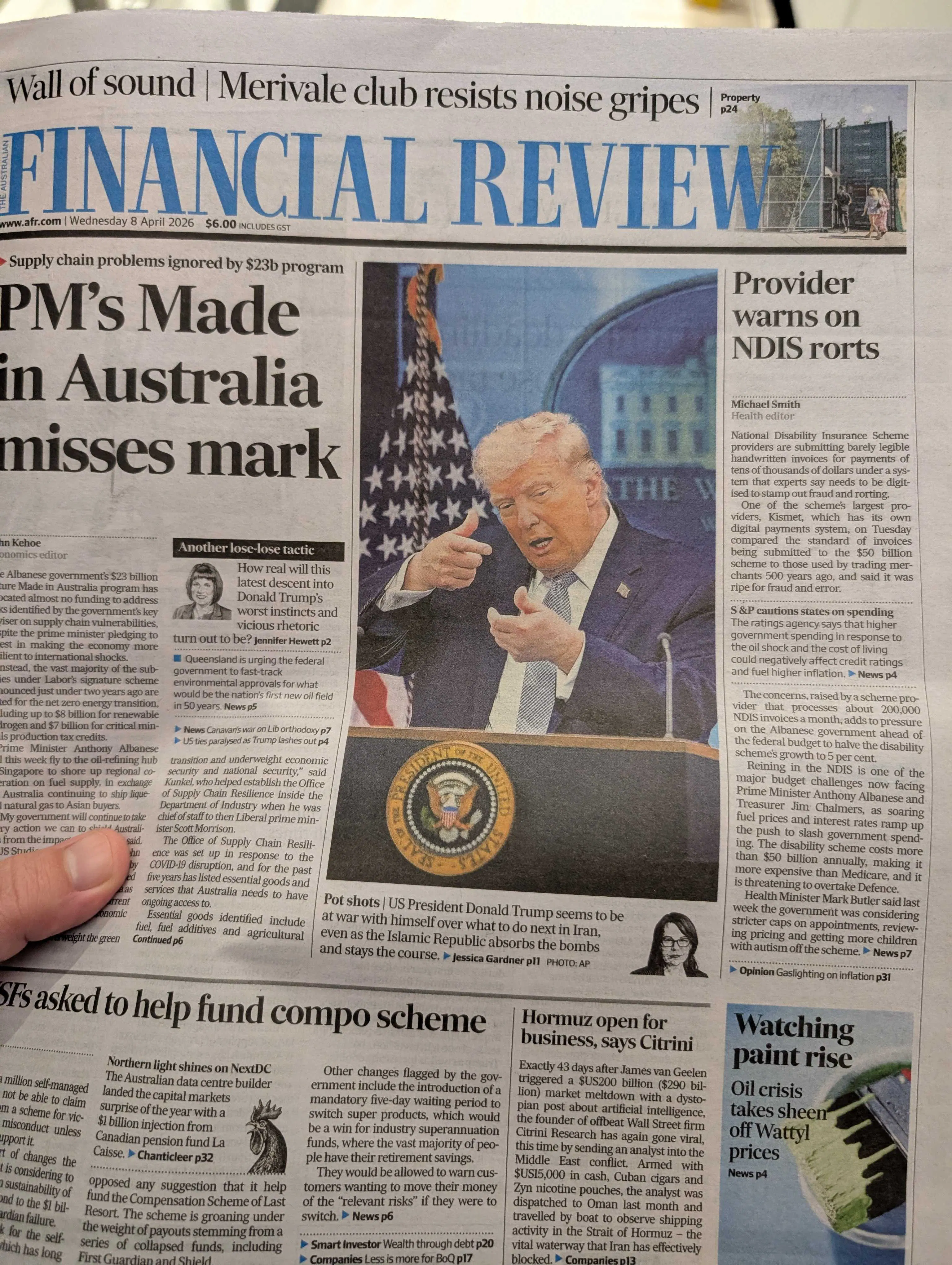
This week, Kismet was featured on the front page of The Australian Financial Review — and while we're proud of the recognition, the story the AFR told is bigger than us.
It's a story about a $50 billion scheme that is still, in many cases, running on paper.
Every month, we process over 200,000 NDIS invoices on behalf of participants and providers. What we see daily would surprise most Australians. Handwritten claims for thousands of dollars. Numbers crossed out and rewritten. Missing item codes. Arithmetic errors. Invoices with no supporting evidence of the appointment ever taking place.
Around 30% of the invoices we receive can't be processed automatically — not because of technical complexity, but because of illegible handwriting and inconsistent formatting.
To put that in perspective: the Australian Tax Office holds individuals to a higher standard when filing a tax return than the NDIS currently requires of providers submitting claims worth tens of thousands of dollars.
This isn't just an efficiency problem. It's a fraud risk.
The NDIS lacks a universal invoicing standard. All a provider technically needs to submit a claim is an ABN, an NDIS number, and a total amount. In a scheme of this scale, that's an extraordinary gap.
We believe the fix exists. The ATO has already developed a modern e-invoicing standard called Peppol — we're in active discussions about extending those standards to NDIS providers. Digitising and standardising the invoicing process would reduce errors, improve compliance, and make fraud significantly harder to hide.
The NDIS exists to support some of Australia's most vulnerable people. It deserves infrastructure worthy of that mission.
We built Kismet because we saw how broken the back-end of disability care was — and how much better it could be. This AFR coverage is a reminder of why that work matters.
We're just getting started.
Read the full Australian Financial Review article [here].